How to Plan the Use of Platform Lifts in Construction Projects

Effective planning is crucial to the success of any construction project, and one of the most important aspects to consider is the use of specialized equipment, such as aerial lifts. Not only does this equipment facilitate access to difficult heights, but it also improves efficiency and safety on site. For project managers, planning the use of aerial lifts into the schedule and budget is essential to ensure that the project is completed on time and within budget.
In this article, we provide you with a complete guide on how to plan the use of aerial lifts on construction projects, from selecting the right equipment to integrating it into your schedule and managing your budget.
1. Project Needs Assessment
The first step in planning the use of aerial lifts is to assess the specific needs of the project. Each job site has unique requirements in terms of height, terrain and the nature of the work to be performed. Therefore, it is critical to understand these aspects in order to select the right platform lift.
a) Working Height
Determine the maximum height at which workers will need to operate. Platform lifts come in different height capacities, from small platforms for indoor work to telescopic platforms that can reach extreme heights. It is important to choose a platform that not only reaches the required height, but also offers stability and safety at that height.
b) Accessibility and Space
Consider space limitations at the construction site. In tight areas or areas with limited access, a compact or articulating platform lift may be more suitable. For larger spaces, a telescopic platform may offer the necessary mobility and reach.
c) Soil Conditions
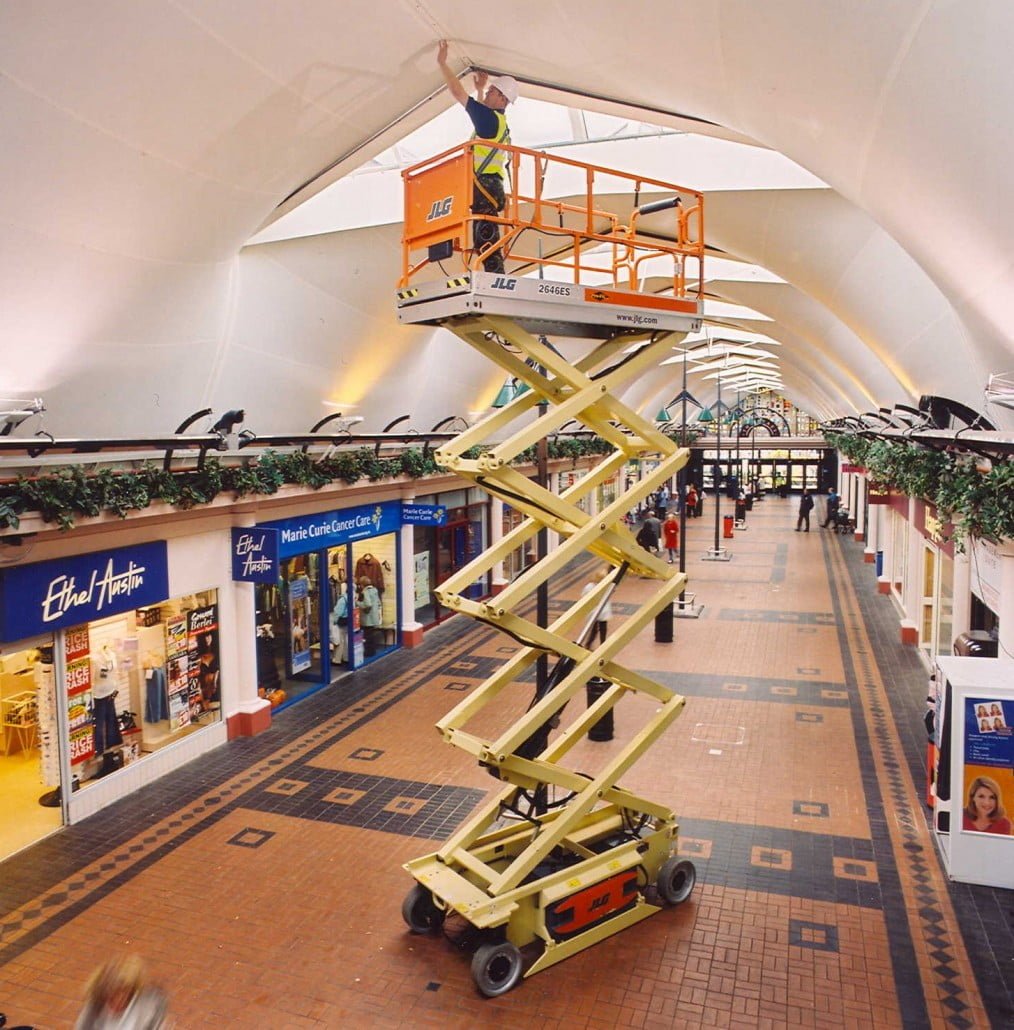
The type of terrain to be worked on also influences equipment selection. If the terrain is uneven or rough, it will be necessary to opt for all-terrain aerial lifts, which are designed to operate on difficult surfaces. On smooth, level surfaces, a scissor lift may be sufficient.
d) Nature of Work
The specific task to be performed will determine the most appropriate type of platform lift. For example, for jobs that require horizontal movement, such as painting or installing windows, an articulating platform might be the best choice. On the other hand, for tasks that require vertical work in a straight line, a scissor lift may be more efficient.
2. Selecting the Right Platform Lift
Once the needs of the project have been assessed, it’s time to select the right platform lift. It is advisable to work with a reputable supplier that can offer expert advice and a variety of rental options. When selecting equipment, consider the following factors:
a) Load Capacity
Make sure that the lifting platform has adequate load capacity for the number of workers and equipment to be used. It is crucial not to overload the platform, as this can compromise the safety and performance of the equipment.
b) Energy and Fuel
Aerial work platforms can be powered by different types of energy, such as diesel, electricity or batteries. For indoor projects, where emissions are a concern, electric platforms are the best choice. For outdoor projects, especially in difficult terrain, diesel or off-road platforms are often more appropriate.
c) Safety Features
Verify that the selected platform has the necessary safety features, such as stabilization systems, safety harnesses and user-friendly controls. Also, make sure the equipment complies with all local and national safety regulations.

3. Integration in the Project Schedule
Once the right equipment has been selected, it is critical to integrate it effectively into the project schedule. Proper planning of the timing and availability of aerial lifts can prevent costly delays and improve efficiency at the construction site.
a) Determination of the Moment of Use
Identify the phases of the project where platform lifts will be needed. This may include jobs such as installing structures, painting at heights or installing electrical systems on facades. By determining these times, equipment rental can be planned just in time, avoiding unnecessary extended rental costs.
b) Coordination with Other Teams and Works
Ensure that the use of the elevating platform is coordinated with other equipment and work on site. This includes planning access routes and avoiding interference with other work in progress. Good communication with different work crews is key to avoiding conflicts and ensuring efficient workflow.
c) Maintenance and Overhaul Scheduling
Include time in the schedule for preventive maintenance and equipment checks. Aerial lifts, like any other equipment, require regular maintenance to function optimally. Coordinate with the supplier to schedule these checks without affecting project progress.
4. Budget Management
Financial planning is a crucial aspect when integrating the use of rental aerial lifts into a construction project. It is important to consider not only the cost of the rental, but also other factors that may influence the budget.
a) Rental Costs
Consult with our consultants to know the different prices of the lifting platforms, the days and hours that are included in the rates and if there is any kind of discount.
b) Operating expenses
In addition to the rental cost, there are other operating expenses to consider, such as fuel, electricity or batteries, depending on the type of platform. It is also important to consider training costs for operators, if necessary, and any additional expenses related to equipment maintenance.
c) Avoidance of Extra Costs due to Delays
Planning the use of aerial lifts efficiently can prevent additional costs due to project delays. Delays in equipment delivery, lack of availability or technical problems can significantly increase costs.

5. Training and Safety
Proper training of personnel who will operate the aerial lifts is essential to the safety and efficiency of the project. Make sure all operators are properly trained and certified. It is also advisable to conduct refresher sessions on safety practices before starting work.
a) Operator Training
We provide training to operators in the use of the specific equipment to be rented. This training includes both the safe operation of the equipment and the handling of emergency situations.
b) Supervision and Compliance with Regulations
Implements a monitoring system to ensure that all safety standards are followed in the use of elevating platforms. This includes the use of personal protective equipment (PPE) and compliance with local and national regulations.
6. Continuous Monitoring and Evaluation
Finally, it is important to continuously monitor and evaluate the use of the aerial lifts during the project. This includes regularly reviewing the condition of the equipment, monitoring operator performance, and evaluating efficiency against schedule and budget.
a) Regular Equipment Overhaul
Schedule regular equipment inspections to identify and fix problems before they affect the project. This may include daily or weekly checks depending on the intensity of use.
b) Efficiency Evaluation
At the end of each project phase, evaluate the efficiency of the use of aerial lifts in relation to the schedule and budget. This evaluation can provide valuable learnings for future projects, allowing you to further optimize the planning and use of this equipment.
Planning the Use of Platform Lifts
Integrating the use of aerial lifts into construction projects effectively requires careful planning, from selecting the right equipment to managing the schedule and budget. By following this guide, project managers can ensure that the use of aerial lifts contributes to the overall success of the project, improving both safety and efficiency on the construction site.
Planning the Use of Lifting Platforms | Globen