How to Choose a Facade Lifting Platform: Practical Guide
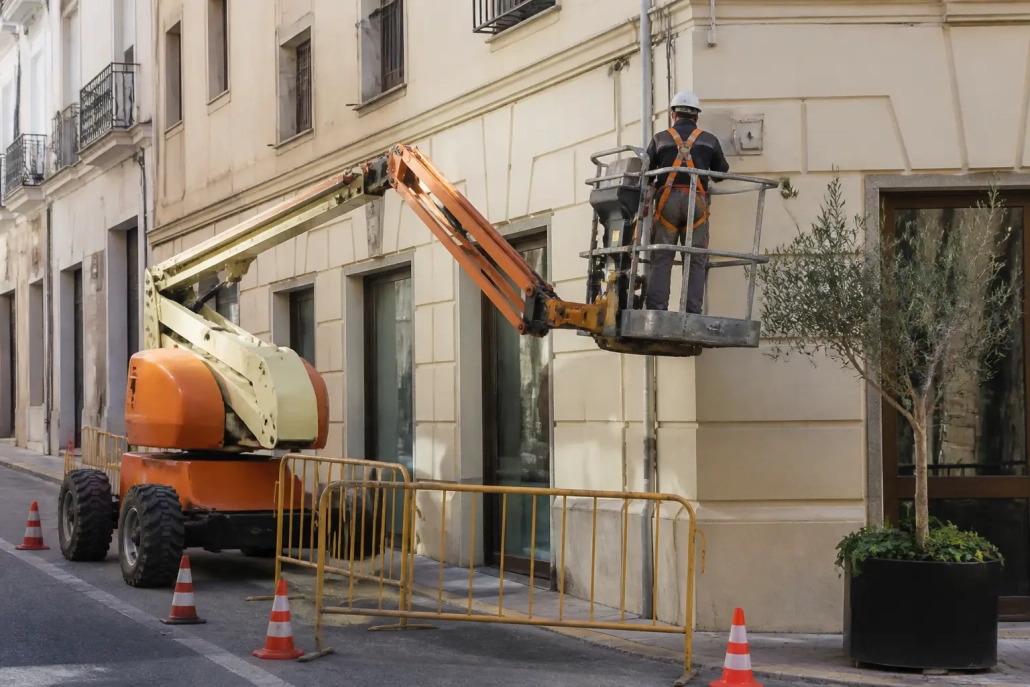
Choosing the right facade lifting platform is crucial to ensure safety, productivity, and regulatory compliance in painting, cleaning, repair, or maintenance work. This technical guide, aimed at project managers and companies in the southeast (Alicante, Elche, Villena, Murcia, Valencia, Albacete), explains types of equipment, selection criteria, safety requirements, and practical recommendations for work planning.
Table of contents
Introduction: Why choosing the right facade lift platform matters
Article objectives and target audience
This section helps site managers, installers, maintenance companies, and safety technicians identify the right machine for each facade intervention. Safety, operational efficiency, and reduction of occupational risks are prioritized.
Common risks in facade work and the advantages of using the right machine
Common risks include falls, tipping over on unstable terrain, contact with electrical installations, and collisions with machinery. Choosing the right platform minimizes unproductive time, reduces exposure to hazards, and allows for more precise work in tasks such as anchoring, painting, or coating inspection.
Types of aerial work platforms and their applications on facades
Scissor lifts: advantages and limitations on facades
Scissor lifts offer a wide working surface and good load capacity, suitable for smooth facades and tasks requiring continuous vertical movement. They limit horizontal reach, so they may not be effective on facades with overhangs or balconies.
Articulated platforms: when they are the best option
If access is restricted by obstacles or overhangs need to be cleared, an articulated platform provides maneuverability and lateral reach. They are ideal for occasional repairs and tasks where the basket must be positioned at complex angles.
Telescopic platforms: reach and high-altitude work
Telescopic platforms stand out for their combined vertical and horizontal reach, useful for tall facades or when materials need to be suspended from the basket. Their greater reach requires consideration of stability, wind, and load capacity.
Truck-mounted platforms: mobility and work on public roads
For interventions that involve moving between points or working on public roads, the truck-mounted platform facilitates parking and quick movement. It is important to coordinate municipal permits and signage.
Other options: basket on boom and combinations
In special cases, baskets attached to cranes or combinations of equipment are used to install scaffolding or perform complementary work. Evaluate the method that interferes least with the safety and logistics of the work site.
How to choose according to the type of facade and work
Smooth and wide facades vs facades with overhangs or balconies
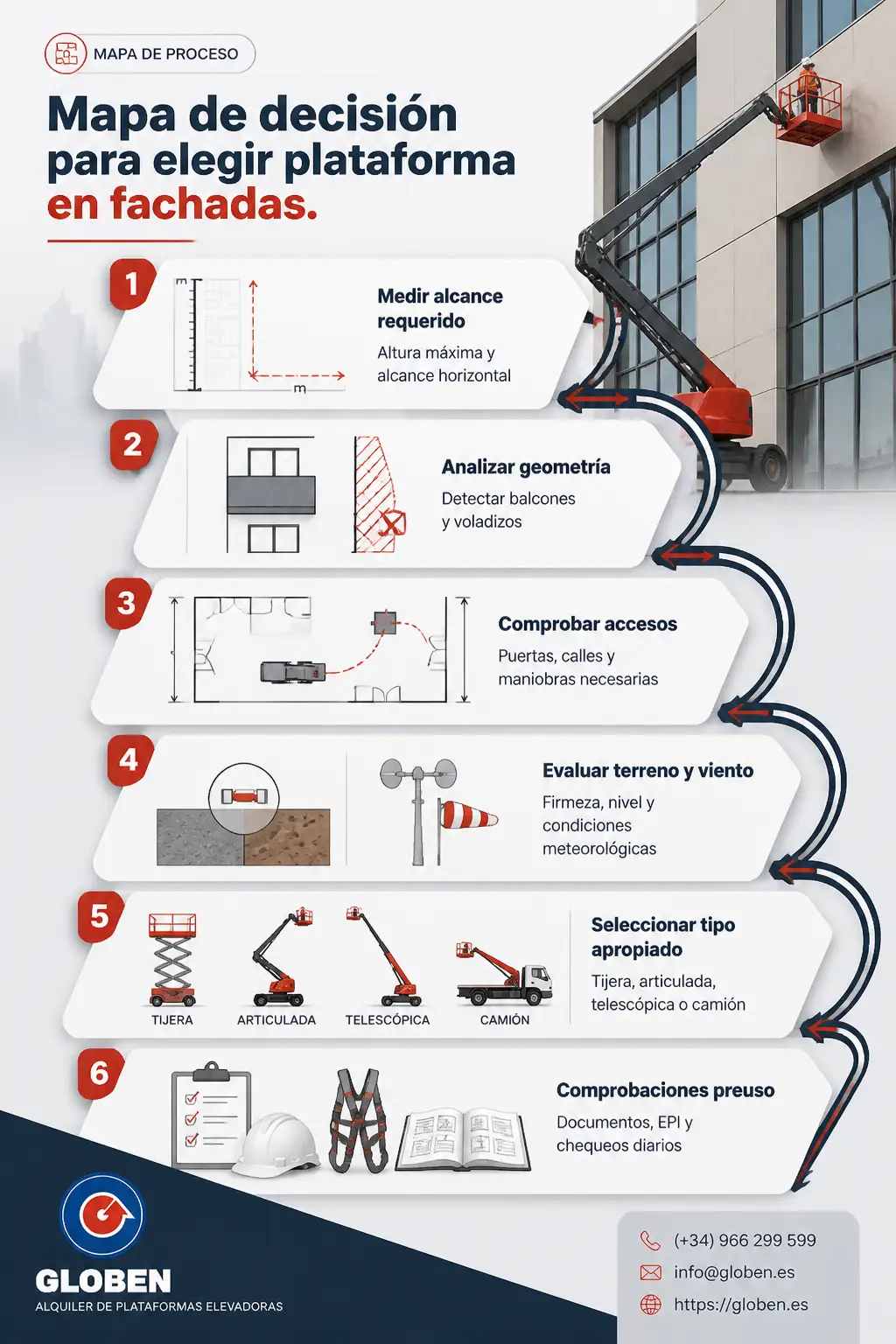
For flat and accessible facades, a scissor lift platform can be the most productive solution. For facades with balconies, openings, or protruding elements, an articulated or telescopic platform that allows lateral access is advisable. Always evaluate the facade's geometry before deciding.
Height, horizontal reach, and load capacity
Define the maximum height to reach and the necessary horizontal reach. These parameters determine the model: telescopic platforms usually offer greater vertical and horizontal reach; scissor lifts have less horizontal reach but a larger work platform. Also consider the weight of operators, tools, and materials.
Access in confined spaces and obstacles on site
When access is limited by corridors, doors, or traffic, it is advisable to consider compact or special models. For working in narrow openings, consult specific options such as a compact space aerial platform and plan the maneuver prior to assembly.
Ground conditions and stability
Check the firmness of the ground and the possibility of using stabilizers. On uneven terrain, machines with hydraulic compensation or supports are needed to ensure leveling and prevent tipping over.
Safety, regulations, and certifications to consider
Mandatory safety equipment and good practices
The equipment must be used with appropriate PPE: helmet, harness, and fall arrest system when indicated. Mark the work area, restrict access, and respect the maximum load limits of the basket.
Applicable regulations and standards (general approach)
Refer to the current regulations on lifting machines and occupational risk prevention applicable in Spain. Manufacturers specify usage limits (wind speed, tilt, capacity). It is the contractor's responsibility to verify the technical documentation before startup.
Pre-use inspection and operator responsibilities
The operator must perform daily checks: controls, brakes, emergency locks, condition of bushings, and safety elements. Maintaining a pre-use log helps traceability and reduces the likelihood of incidents.
Maintenance, Inspections, and Rental Logistics
Preventive Maintenance and Daily Checks
A preventive maintenance plan extends the lifespan and prevents downtime. Check hydraulic levels, friction elements, and the condition of wheels and joints before each workday.
Periodic inspections and technical documentation
Request the equipment documentation from the supplier: user manual, maintenance history, and periodic inspections. This information is necessary for audits and to ensure safe use on site.
Tips for hiring rentals in Alicante, Elche, and Murcia
When planning the rental, consider transportation times, municipal requirements, and operator training. For local jobs, look for references about aerial platform rental in Alicante and nearby options such as aerial lift rentals in Elche. If you need a standard height, consider alternatives like the 12m lift platform rental according to coverage needs.
For larger scale solutions or projects with multiple locations, consult catalogs of aerial platform rental that include different types of machines.
Practical checklist for choosing and planning facade work
Quick checklist before starting work
- Define the required height and horizontal reach.
- Check access and restrictions on public roads.
- Check ground firmness and the need for stabilizers.
- Review technical documentation and maintenance history.
- Confirm PPE and operator training.
- Mark and cordon off the work area.
Operational and Productivity Criteria
Prioritize equipment that reduces positioning times and minimizes manual handling of materials. Proper planning of work shifts and access to the facade improves productivity and reduces the risk of incidents.
Conclusion and next steps for project managers
Summary of key recommendations
The choice of the facade lifting platform should be based on the facade's geometry, the required reach, environmental conditions, and safety requirements. Always check the technical documentation, perform pre-use inspections, and plan permits and signage when working on public roads or in urban environments.
How to use this guide to request equipment or local advice
Use the checklist to prepare the supplier request and describe height, access, and expected loads. For projects in the southeastern peninsula, adjust logistics to travel times and local regulations.
Frequently Asked Questions
Which platform is best suited for cleaning and painting a 12-meter facade? It depends on accessibility; if the facade is wide and without projections, a scissor lift may suffice, but if there are obstacles, an articulated or telescopic lift is advisable.
What checks should be done before using an aerial work platform on a façade? Check controls, brakes, stabilizers, ground firmness, signage, and personal protective equipment (PPE) of the personnel.
Does the facade lifting platform require authorization to operate on public roads? It is usually necessary to coordinate with the city council and comply with local ordinances; always consult with the local administration.
If you need support to technically assess a facade intervention, use this guide to prepare the request to the provider and ensure a safe and efficient job.