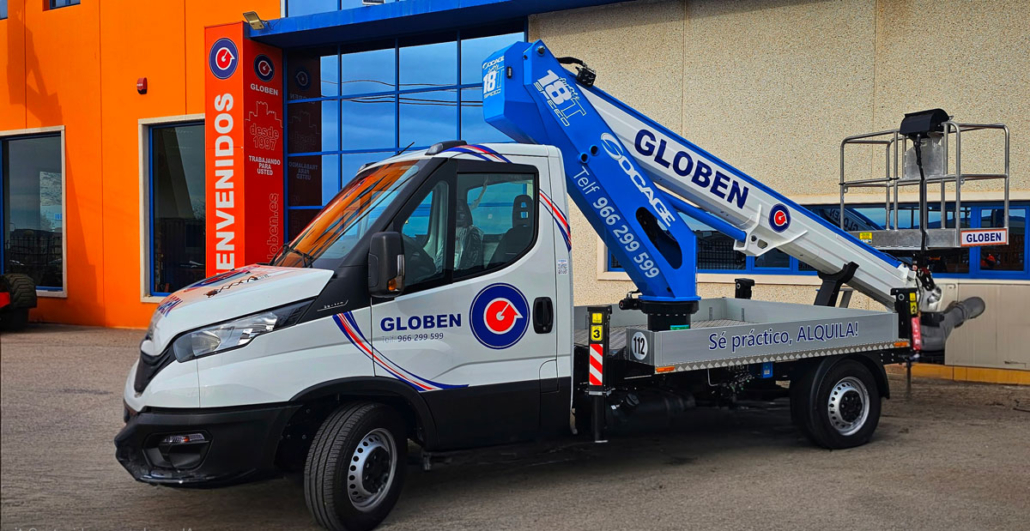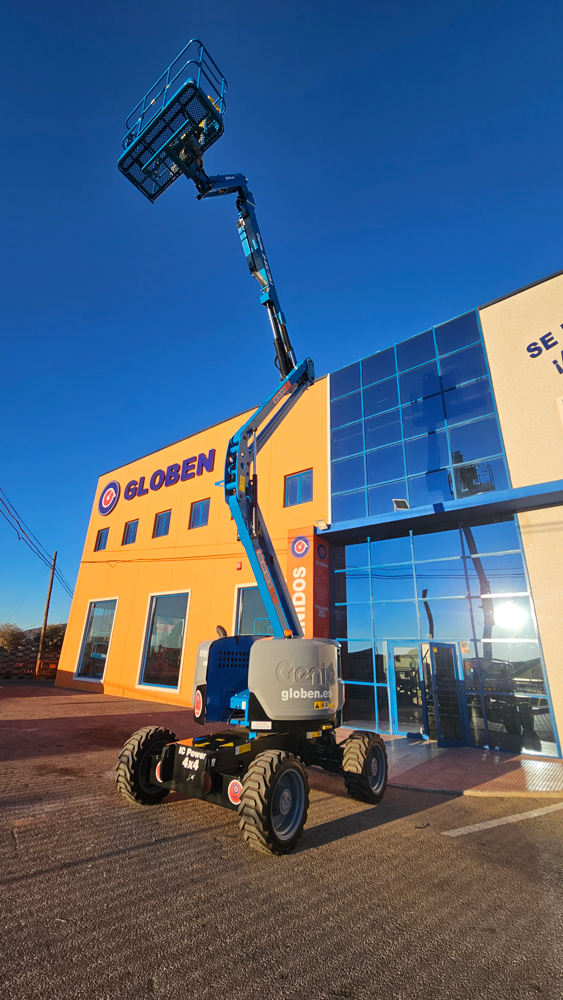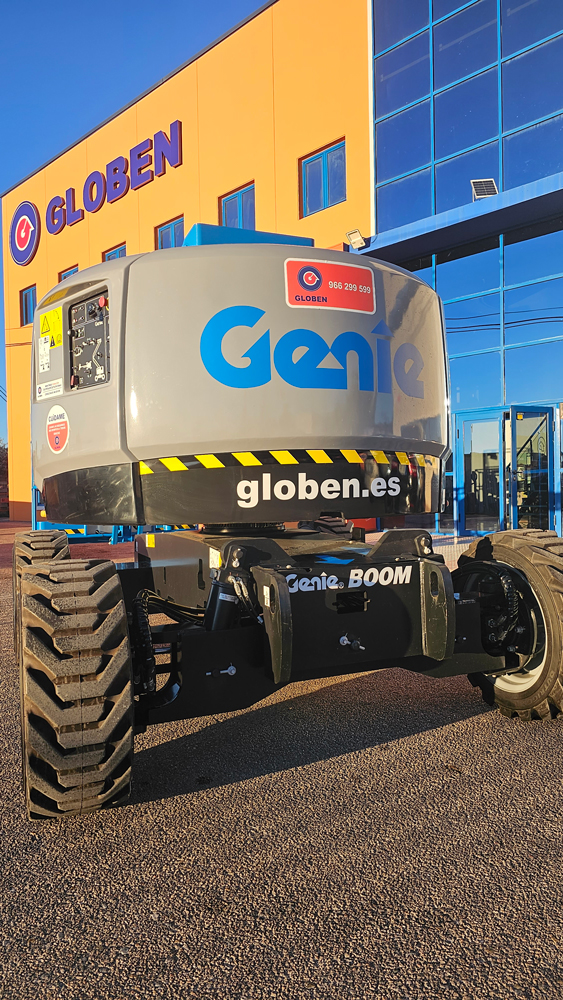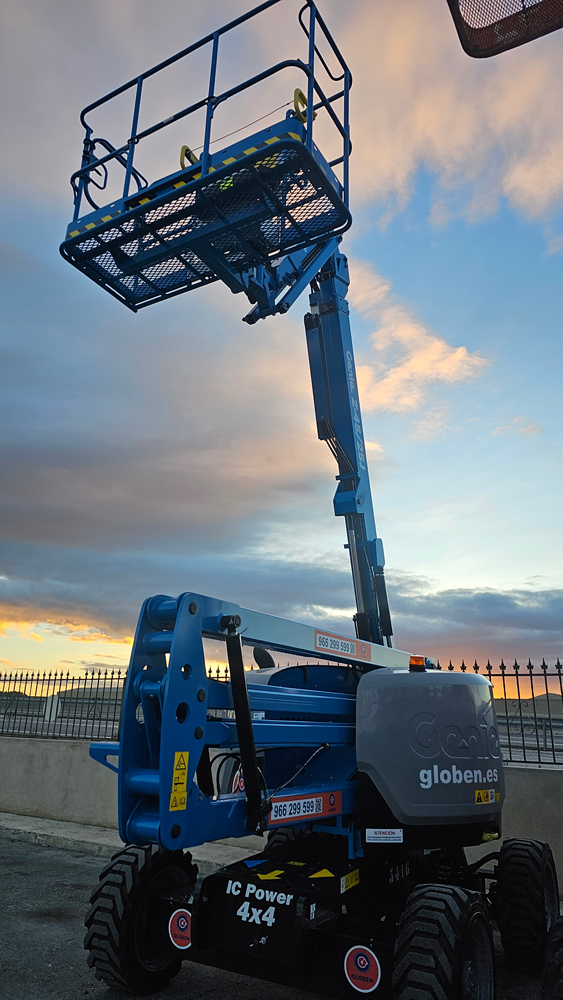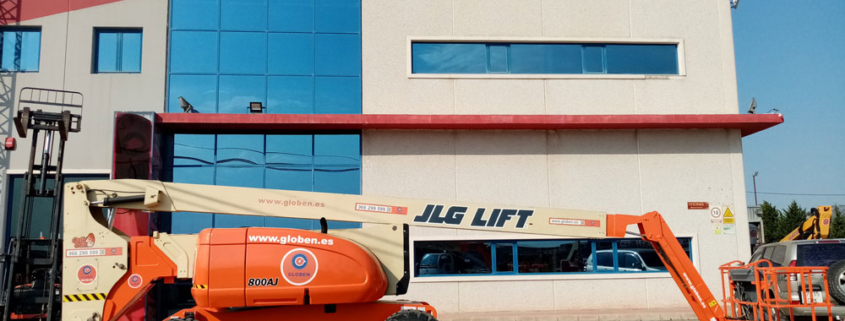
When working at heights, choosing the right equipment goes far beyond working height or horizontal reach. One of the most decisive, and often overlooked, factors is the maximum gradeability. This defines the ability of a forklift to travel or work on inclined surfaces, a very common condition on construction sites, industrial environments or outdoor maintenance tasks.
At Globen, a company specialized in the rental of lifting platforms, this factor is taken into account in every recommendation, because it guarantees not only efficiency, but also operational safety.
What is the maximum gradeability of lifting machinery?
The maximum gradeability refers to the maximum slope that a machine can safely ascend or descend without compromising its stability or the operator’s safety. It is usually expressed in degrees (°) or in percentage (%), and each model has its own limit, defined by the manufacturer after rigorous testing.
Degrees vs. percentage of inclination
Both units measure the same thing, but from different perspectives:
- A 100% slope is equivalent to 45 degrees.
- A 30% slope is equivalent to about 16.7 degrees.
In elevating machinery, the percentage is usually used, as it better reflects the relationship between the slope and the distance traveled.
For example:
- A platform with a maximum surmountable slope of 30% can rise 30 cm for each meter of advance.
Why is this so important to know?
On level ground, any lifting equipment works stably. But in uneven environments, such as construction site access, sloping roads or uneven ground, it is essential to know how far each machine can reach without endangering the operator, the equipment or the environment.
Risks of operating on slopes above the limit
When the permissible inclination limit is exceeded, the risks skyrocket:
- Overturning of the machine, especially if the load is elevated.
- Slipping or loss of traction, especially on wet or unstable surfaces.
- Automatic deactivation of functions, as many units are equipped with tilt sensors that prevent dangerous maneuvers.
Real cases of accidents due to excessive inclination
Technical studies have shown that one of the main causes of accidents with elevating platforms is improper use on slopes, either due to lack of knowledge, overconfidence or lack of planning. The consequence is usually a serious accident that affects the integrity of the operator, damages the machine and stops the project.

Maximum slope by type of lifting machine
Each type of equipment is designed for a specific environment, and its ability to cope with slopes varies significantly.
Tracked lifting platforms
These machines are specifically designed to work in difficult soils. Thanks to their track system, they have greater traction and excellent weight distribution.
- Gradeability: between 30% and 45% (even more in specific models).
- Ideal for: work in gardens, unstable terrain, steep slopes or areas with difficult access.

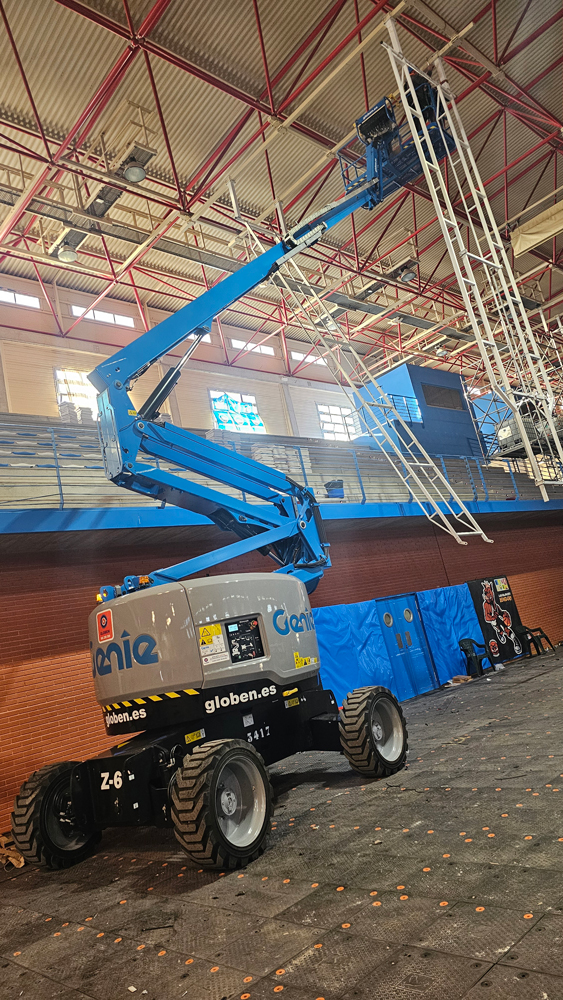
Articulated and telescopic arms
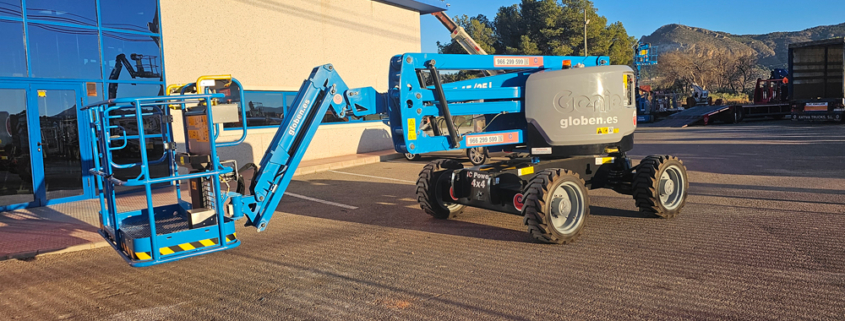
They are used in many urban, industrial and construction site environments. Although not designed for extremely uneven ground, some models are equipped with oscillating axles and four-wheel drive for improved performance.
- Gradient that can be overcome: between 25% and 40% depending on the model.
- Recommended for: construction sites, facade maintenance, structure assembly.

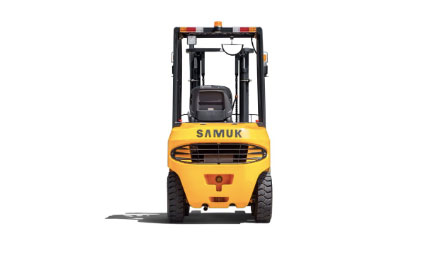
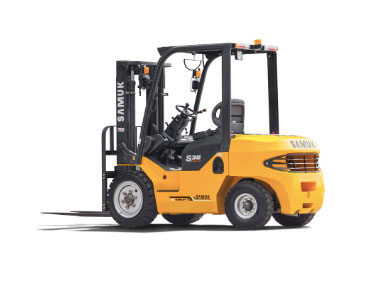
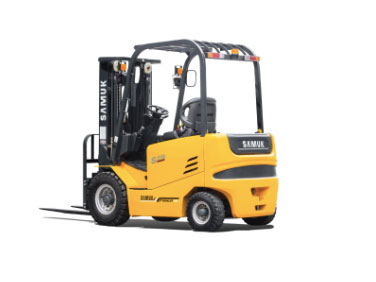
Forklift trucks 4×4
Although they are not lifting platforms, they are often used in combination with them to transport loads on uneven terrain. Their all-wheel drive allows them to climb steep ramps, especially on dirt or gravel terrain.
- Gradient that can be overcome: between 30% and 50%.
- Usual use: movement of materials on construction sites or industrial facilities.
How to check the slope of the terrain before operation
Before moving a machine or starting work, it is essential to measure the slope of the terrain. It is not enough to estimate it “by eye”.
Measuring tools and devices
- Digital inclinometers: give accurate readings in degrees or percentages.
- Mobile applications: there are free apps that use the cell phone’s gyroscope to measure inclination.
- Laser levels with slope function: widely used in construction.
In addition, many modern machines incorporate internal sensors that detect the inclination of the chassis or boom, and even block operation if the safe threshold is exceeded.
Interpretation of the technical manual of each machine
Each platform has a manufacturer’s manual detailing the maximum slope that can be overcome in both travel and elevation. These values are not interchangeable. Some platforms can travel on slopes of up to 40%, but cannot be lifted if the terrain is steeper than 5%.
It is always necessary to verify:
- Maximum slope of displacement
- Maximum slope for work at height
- Need for additional shims or stabilizers
Good practices for working on slopes
Knowing the data is not enough. Applying preventive measures is key to maintaining security.
Pre-stabilization and shimming
Before operating on a slope, you must:
- Secure the soil (compaction if it is loose soil).
- Chock wheels if stopped on a slope.
- Use stabilizers according to the manufacturer’s instructions
Choosing the right machine
It is common to make the mistake of using an urban machine for work in rural or uneven terrain. Not all platforms are suitable for slopes. If access is difficult, it is best to opt for tracked or all-wheel drive models with automatic leveling systems.
Globen, for example, advises the client according to the terrain, and offers alternatives such as:
- Tracked platforms with independent traction
- 4×4 platforms with oscillating axle
- Equipment with telescopic arm to bridge slopes from a more stable location
Staff training
A lifting platform is not a conventional vehicle. It requires specific training, both in driving and occupational safety. The operator must know:
- How to interpret the terrain
- How to act if the machine loses stability
- What to do if you stop on a slope
Training reduces accidents and improves the efficient use of equipment.
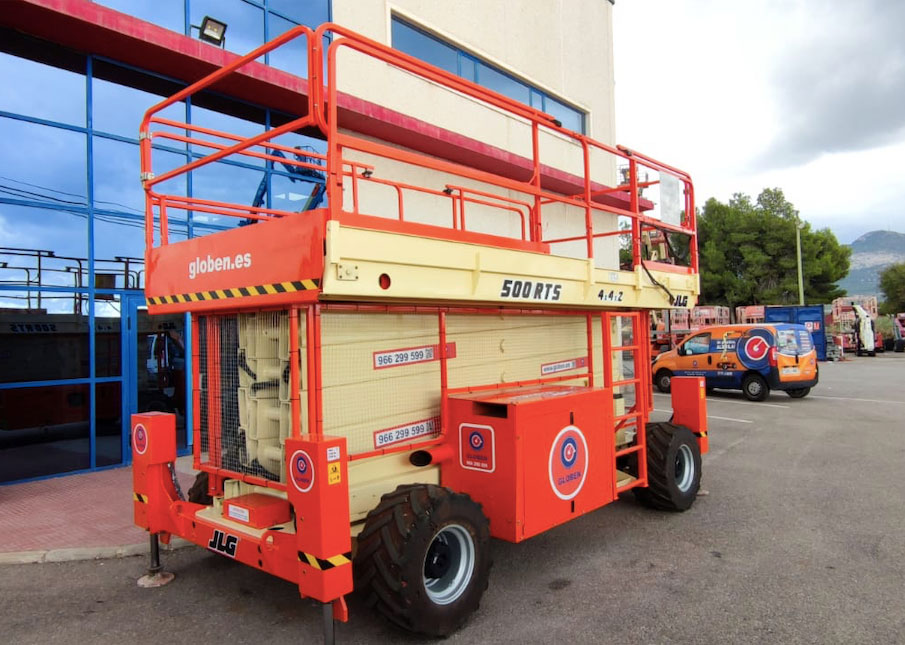
Conclusion: The maximum slope is not a minor data point.
When working at height, the slope of the terrain can make the difference between a safe job and a preventable accident. Knowing the maximum gradeability of each machine not only improves the performance of the equipment, but also guarantees the integrity of the operator and the continuity of the project.
At Globen, every consultation is done with this information on the table. Because renting a lifting platform is easy, but choosing the right one for the terrain and working conditions is a strategic decision.
We are here to help you take your ideas to the next level! Globen, a leading aerial lift rental company, understands the importance of providing high quality equipment.