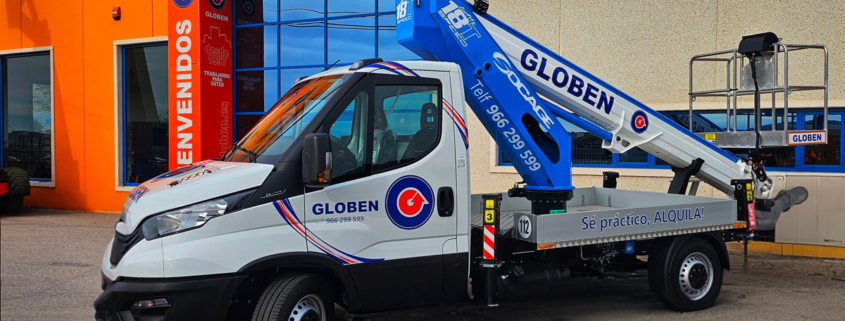
alquiler de cesta elevadora

Access to modern equipment without the costs of purchase, maintenance, or storage is a major advantage. However, making the wrong rental decision can lead to delays, additional costs, and even workplace hazards.

At GLOBEN, with over 25 years of experience in the sector, they know that choosing the right machinery is key to the success of any project. That’s why, if you’re thinking about renting, it’s a good idea to be aware of the most common mistakes… and how to avoid them from the start.
Why is it important to choose the right lifting equipment?

Aerial work platforms are equipment designed to work at height safely and efficiently, replacing traditional methods such as scaffolding or ladders.

Choosing correctly is not just a technical matter: it directly affects three critical factors:

Security

Working at heights involves significant risks. A poor choice can lead to accidents, falls, or misuse of equipment.

Costs

Selecting the wrong machine can result in downtime, longer rentals, or even the need to change equipment mid-project.

Productivity

A suitable platform allows you to do the job faster, with greater accuracy and less effort.

That’s why having professional advice and reliable equipment like that offered by GLOBEN makes all the difference from the start.
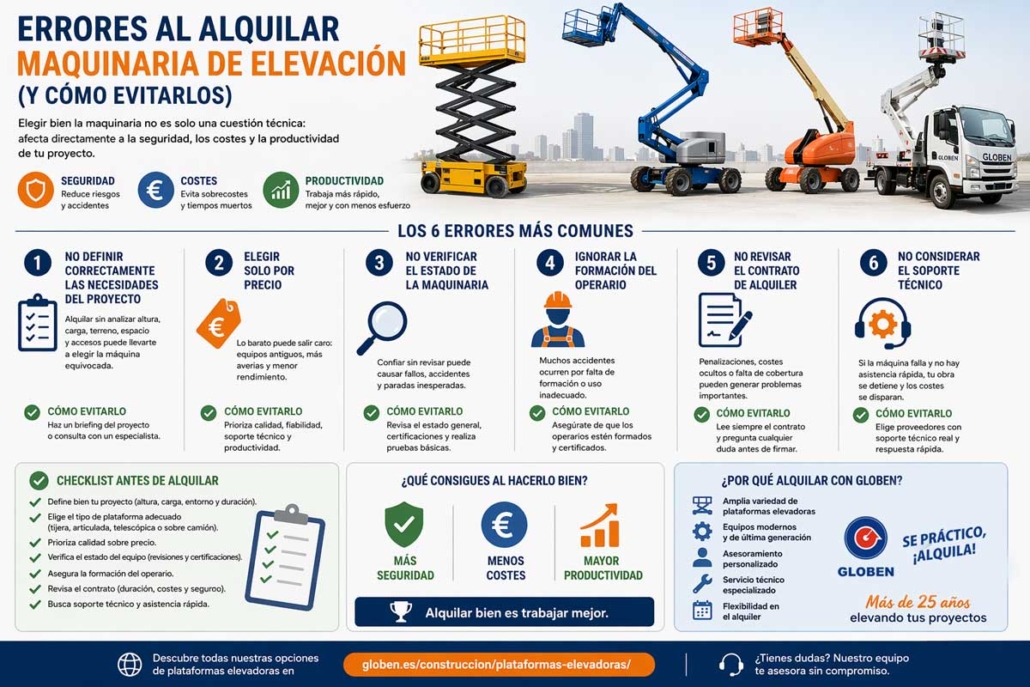
Mistakes when renting lifting equipment

One of the most frequent mistakes is renting without first analyzing the work to be done.

What should you keep in mind?

  • Required working height
  • Load weight (operators + tools)
  • Type of terrain (interior, exterior, irregular)
  • Available space and access

Working indoors is not the same as working outdoors:

  • Electric scissor lifts are ideal for indoor use
  • Articulated or diesel vehicles perform better on difficult terrain.

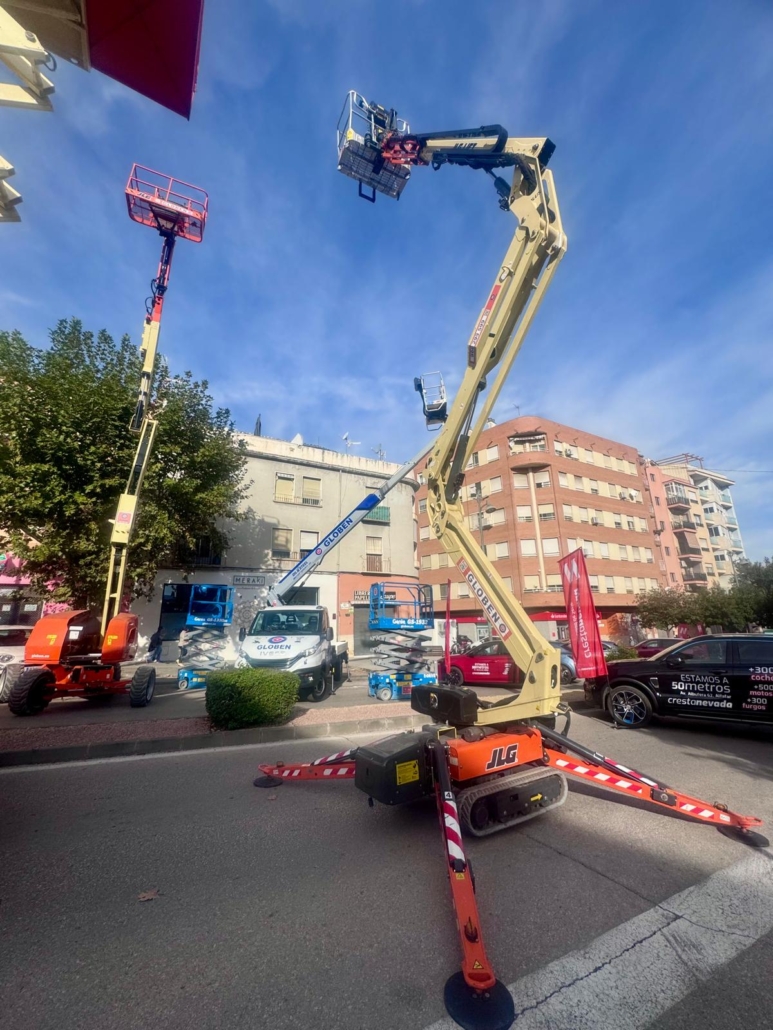
At GLOBEN you have multiple options adapted to each case, from scissor lifts to articulated or truck-mounted equipment.

https://globen.es/en/lift-platforms-for-rent/

How to avoid this mistake

Before renting, do a short project briefing or consult with a specialist.

Looking for the lowest price is understandable, but it can end up being expensive.

The problem

A cheap option might involve:

  • Old or inefficient equipment
  • Higher risk of breakdowns
  • Lower performance

Cost vs value

Machinery rental should not be evaluated solely on the daily price, but also on:

  • Equipment reliability
  • Technical support
  • Productivity

How to avoid this mistake

Prioritize suppliers that offer:

  • Modern equipment
  • Good technical service
  • Personalized advice

Another common mistake is trusting the equipment without checking it.

Risks

  • Failures during work
  • Workplace accidents
  • Unexpected stops

In professional companies like GLOBEN, machinery is subject to constant controls and maintenance.

What to check before renting

  • General condition of the machine
  • Certifications and reviews
  • Basic operation

How to avoid this mistake

Work with companies that guarantee maintenance and regular checkups.


Having the right machine is useless if it is not used correctly.

Problem

Many accidents occur due to a lack of training.

Requirements

The use of lifting platforms requires:

  • Specific training
  • Security knowledge
  • Proper handling of the equipment

How to avoid this mistake

Make sure the operators:

  • They are certified
  • They know the team
  • They follow safety protocols

The contract is key… and it is often overlooked.

Important aspects

  • Rental duration
  • Additional costs
  • Insurance included
  • Liability for damages

Common problems

  • Unexpected penalties
  • Hidden costs
  • Lack of coverage

How to avoid this mistake

Always read the contract and ask any questions before signing.

Imagine the machine breaks down in the middle of the project…

Risks

  • Construction stoppages
  • Delays
  • Extra costs

What you should demand

  • Fast assistance
  • Maintenance included
  • Replacement in case of breakdown

How to avoid this mistake

Choose providers with real technical support, not just rentals.


Key tips for renting machinery without mistakes

✔ Clearly define your project
✔ Choose the right platform type
✔ Prioritize quality over price
✔ Verify the equipment’s condition
✔ Ensure operator training
✔ Review the contract
✔ Seek technical support


Why rent lifting equipment with GLOBEN?

If you want to avoid all these mistakes, working with a specialist provider makes all the difference.

GLOBEN offers:

  • Wide variety of lifting platforms
  • State-of-the-art equipment
  • Personalized advice
  • Specialized technical service
  • Rental flexibility

Conclusion: Renting well means working better.

Renting lifting equipment is not just a logistical issue, but a strategic decision.

The most common mistakes—not defining needs, prioritizing price, or ignoring safety—can seriously affect your project.

The key is to plan, get informed, and have a reliable supplier.

If you do it right, you’ll not only save money, but you’ll also gain efficiency, safety, and peace of mind. And that, in any construction project, is what truly makes the difference.


We’re here to help you take your ideas to the next level! Globen, a l company, understands the importance of offering high-quality equipment.
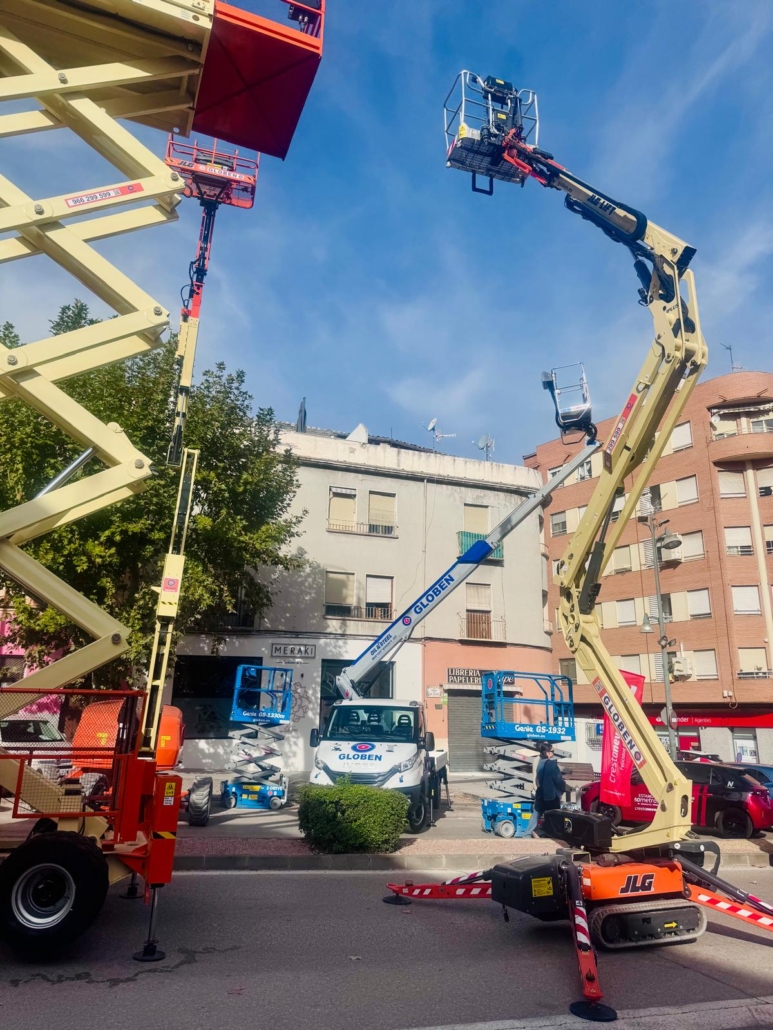
Regulations for working at heights in Spain

Working at heights is a daily occurrence in sectors such as construction, industrial maintenance, and installations. However, it is also one of the most hazardous occupational activities. Therefore, regulations governing working at heights in Spain are particularly strict and designed to prevent accidents and ensure the safety of workers.

This guide, updated to 2026, clearly explains the legal obligations, training requirements, and safety measures necessary to comply with current regulations.


What is considered working at height according to regulations?

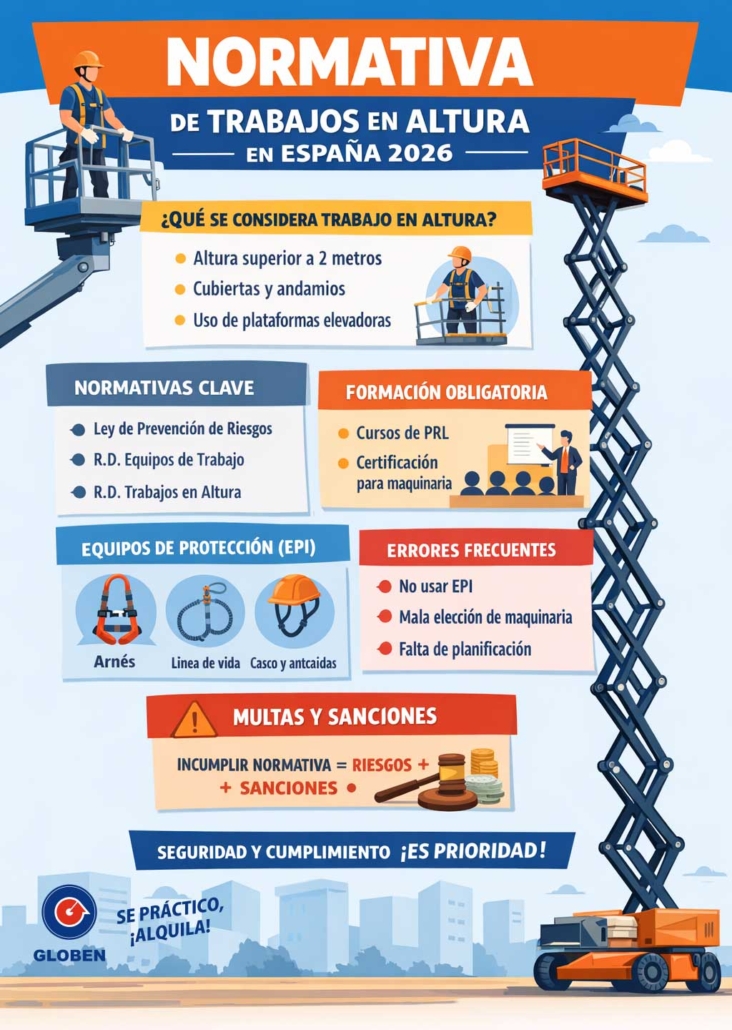
Any activity performed at a height where there is a risk of falling is considered work at height, typically starting from 2 meters. However, regulations are not based solely on height, but also on the risk associated with the task.

Common examples of working at height

  • Roofing or roof work
  • Use of scaffolding or ladders
  • Operation of lifting platforms
  • Electrical installations or industrial maintenance

In all these cases, it is mandatory to apply specific prevention measures.


Main regulations for working at height in Spain

In Spain, work at height is regulated by different laws and regulations that establish the minimum safety conditions.

Occupational Risk Prevention Law

The Occupational Risk Prevention Law establishes the obligation to guarantee the safety of workers through risk assessment and the adoption of preventive measures.

Royal Decree on work equipment

Royal Decree 1215/1997 regulates the safe use of equipment such as lifting platforms, scaffolding or ladders.

Specific regulations on temporary work at height

Royal Decree 2177/2004 complements the previous regulations, establishing specific requirements for work at height, including the use of protective equipment and appropriate training.

For official information, you can directly consult the National Institute for Occupational Safety and Health, where updated technical guides and recommendations are detailed.


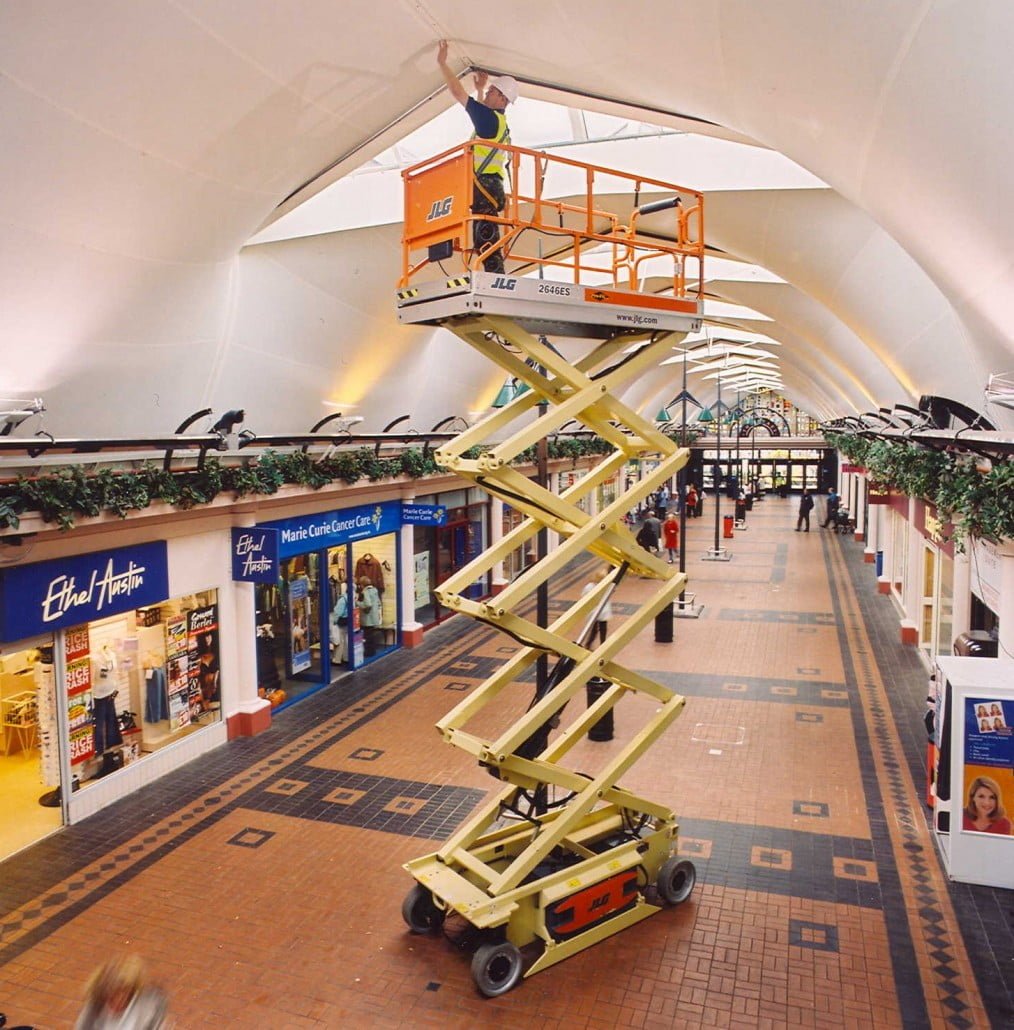
Electric scissor lifts, used for indoor work

Company obligations in work at height

Companies have a clear responsibility when work is carried out at height. Failure to comply with regulations can lead to significant penalties and, more seriously, workplace accidents.

Mandatory risk assessment

Before starting any work, it is essential to analyze the associated risks:

  • height
  • environmental conditions
  • type of machinery
  • access to the workplace

Planning and security measures

The company must define how the work will be carried out:

  • choosing the right equipment
  • collective protection systems
  • use of safe machinery

In many cases, opting for the rental of lifting platforms is the safest and most efficient solution compared to traditional methods.

Supervision and control

Furthermore, it is necessary to ensure that:

  • The workers comply with the measures
  • The equipment is in good condition
  • Safety protocols are respected

Mandatory training for working at heights

One of the key points of the regulations is training.

What training does an operator need?

All workers who perform work at height must have specific training in:

  • risk prevention
  • use of protective equipment
  • machinery handling

In the case of lifting platforms, practical training is essential to ensure safe use.

Recommended certifications

Although the law does not establish a single mandatory certificate, it does require that the training be appropriate for the job. Therefore, many companies opt for accredited courses that certify the operator’s qualifications.


Mandatory protective equipment (PPE)

The use of personal protective equipment is mandatory when working at heights.

Main PPE

  • Arnés de seguridad
  • life lines
  • Protective helmets
  • Fall protection systems

These items must be approved and in perfect condition.


Regulations for the use of lifting platforms

The use of lifting platforms is subject to specific requirements within the regulations.

Requirements to operate machinery

  • specific operator training
  • correct use of equipment
  • respect for load capacity

Inspections and maintenance

The machines must be checked periodically to ensure they are working properly.

If you need this type of machinery, you can look into solutions such as renting aerial work platforms in Alicante, where equipment adapted to each type of work is offered.

Good usage practices

  • do not overload the platform
  • work on stable surfaces
  • avoid adverse weather conditions

Regulations for working at heights in Spain

Common mistakes when working at heights (and how to avoid them)

Many accidents are caused by avoidable mistakes. These are some of the most common:

  • choosing the wrong type of machinery
  • not using PPE correctly
  • improvise instead of plan
  • disregard the terrain

Avoiding these errors not only improves safety, but also work efficiency.


Working at heights in Alicante and the Valencian Community

In areas such as Alicante, Elche, or Villena, working at heights is common in:

  • construction
  • mantenimiento industrial
  • facilities

Therefore, it is essential to have suitable equipment and comply with current regulations.

The use of professional machinery such as lifting platforms allows for safer, faster, and more efficient work.


Why complying with regulations avoids risks and penalties

Complying with regulations for working at heights is not just a legal obligation. It’s an investment in safety, productivity, and peace of mind.

Companies that correctly implement these measures:

  • reduce accidents
  • avoid economic sanctions
  • improve work efficiency

Furthermore, they convey a professional and responsible image.


Conclusion

The regulations governing working at height in Spain in 2026 continue to focus on prevention, training, and the use of appropriate equipment. Understanding and applying these regulations is key to ensuring safety on any project.

If you need advice or specialized machinery, having industry professionals on board can make the difference between a safe job and an unnecessary risk.
We’re here to help you take your ideas to the next level! Globen, a l company, understands the importance of offering high-quality equipment.