What is an articulated arm and what tasks is it suitable for?
For site managers and technicians who need access to complex points at height, articulated arm rental is a solution that combines vertical reach with lateral maneuverability. These machines allow you to overcome obstacles such as ledges, protrusions, and intermediate structures that prevent the use of scissor lifts or telescopic platforms. We are your company for construction machinery rental.
Table of contents
Definition and Main Components
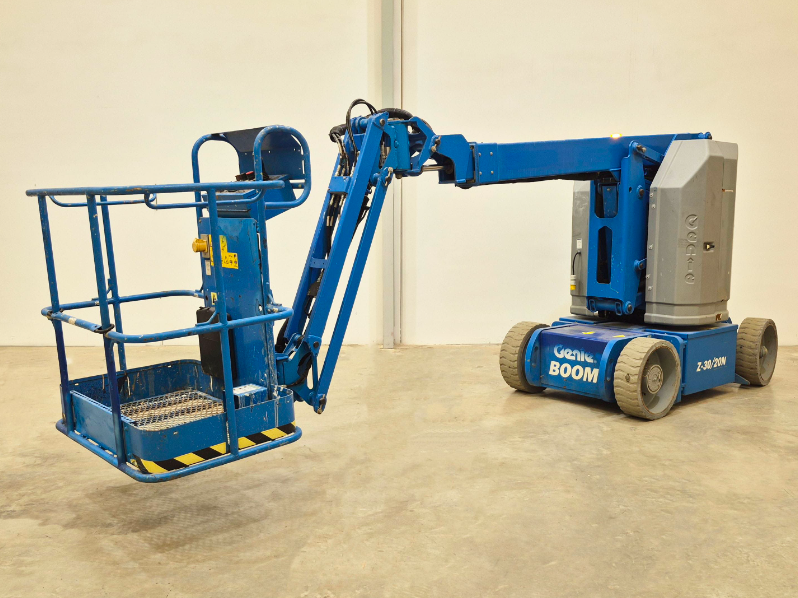
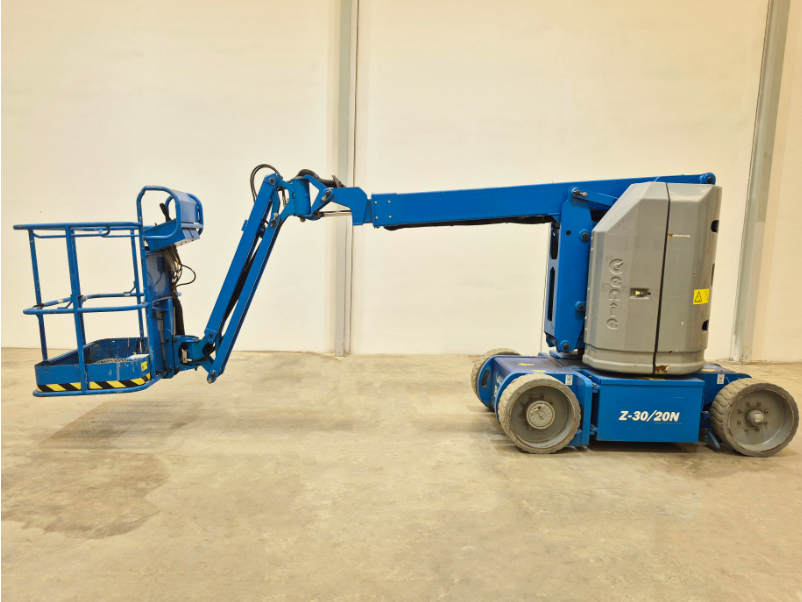
An articulated arm is a lifting platform made up of arms with intermediate joints that move the basket in various planes. Its main components are the chassis, the stabilization system (when present), the articulated structure, the basket, and the controls both in the basket and on the ground. Consider renting an articulated arm.
Common types (electric, diesel, truck-mounted) and their uses
There are electric, diesel, and truck-mounted variants. Electric models are ideal for indoor use or worksites with emission and noise restrictions; diesel ones offer greater autonomy for outdoor use and rough terrain; truck-mounted units facilitate transport and deployment in urban services or road maintenance. Before finalizing an articulated boom rental, it’s important to clearly define the work environment and the applicable emission regulations.
Advantages and limitations of the articulated boom
Access to hard-to-reach points and maneuverability
The main advantage is access to difficult areas: the articulated arm allows you to bypass obstacles and position the basket at angles unreachable by a scissor lift. Its maneuverability and small turning radius are useful on complex facades, HVAC installations, and events with elevated structures. Renting an articulated arm makes these maneuvers easier.
Limitations compared to scissor and telescopic platforms
Regarding limitations, the articulated platform usually offers less load capacity than a scissor lift and less horizontal reach than some telescopic lifts. For strict vertical movements with heavy payloads, a scissor platform may be more efficient; for large horizontal reaches and extreme heights, the telescopic one may be preferable.
Technical criteria for choosing a rental
Required working height and horizontal reach
Set the minimum working height and horizontal reach. The articulated arm rental must meet both requirements with a safety margin to avoid working at the limit of its capacity. Measure on site from the support point to the maximum working height and consider any intermediate obstacles.
Load capacity and size of the basket
Consider the weight of operators, tools, and materials. Load capacities and basket dimensions vary between models; a larger basket makes it easier for two operators to work and transport materials, but it may reduce maneuverability.
Access and maneuvering conditions on site (width, turns, obstacles)
Consider the passage width, turning radius, and the possibility of dismantling parts for passage. If the access is narrow, some compact models allow maneuvers with reduced dimensions.
Type of terrain, indoor vs outdoor, and emissions
For indoor use, prioritize electric scissor lifts; outdoors, diesel or truck-mounted machines offer autonomy. Check if the project requires machines with emission labels or municipal restrictions.
Autonomy, transportation, and assembly/deployment requirements
Ask about the actual autonomy, deployment time, and whether stabilizers or special permits are required for installation. Transportation and assembly affect deadlines and logistics of the rental contract.
Safety, regulations, and mandatory training
PPE Requirements and Basket Restraint
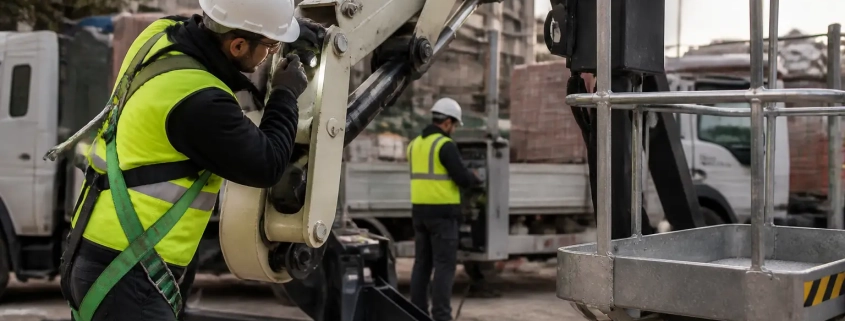
The operator must wear a certified harness and corresponding anchor points. In addition to a helmet and safety footwear, assess elements such as gloves and eye protection depending on the task. Basket restraint is mandatory when required by regulations or when there is a risk of falling.
Pre-use inspections and stability control
Perform a daily visual inspection of the structure, hoses, controls, and safety systems before each workday. Check the ground conditions and the correct position of stabilizers if the model includes them.
Training and qualification of the operator
The operation of aerial work platforms requires specific training and proper certification. The company responsible for the project must ensure that the operators have the qualifications and practical tests that prove their competence.
Documentation and responsibilities (operator, contracting company)
Keep manuals, maintenance sheets, and the report of the last inspection. Define contractual responsibilities regarding maintenance, breakdowns, and insurance before starting the articulated arm rental.
Basic maintenance and good operational practices
Daily checklist before climbing into the basket
- Visual inspection of structure and joints.
- Check controls in basket and on ground.
- Verification of levels (battery/fuel) and hydraulic systems.
- Inspection of anchors and PPE (Personal Protective Equipment).
Note down the reference for the articulated arm rental on the daily sheet.
Recommended preventive maintenance during the rental
Request a basic maintenance plan and intervention log from the supplier. Lubrications, checking hydraulic pressures, and the condition of tires or tracks are preventive actions that prevent downtime and improve productivity.
Warning signs and actions to take in case of breakdowns
Establish a protocol in case of control failures, loss of stability, or hydraulic leaks. Stopping the machine and notifying technical service is the safe option; do not attempt improvised repairs on site.
Checklist and key questions when renting
Technical information to request from the supplier
Request the technical datasheet including vertical and horizontal reach, load capacity, basket dimensions, type of propulsion, and stabilization requirements. Also inquire about the machine’s age and the date of the last maintenance.
Contractual and logistical aspects to confirm (transport, insurance, deadlines)
Confirm transport, delivery time, insurance, and damage coverage. Clarify responsibility for breakdowns and replacement procedures. For projects in the area, also plan access times and permits if working on public roads.
Practical comparison: when to choose an articulated arm vs other machines
Typical use cases (installations, facade maintenance, events, industry)
The articulated arm rental is optimal for installations at height with obstacles (air conditioning, electrical installation in setbacks), maintenance of facades with cornices, assembly of structures at events, and industrial work with limited access.
Brief examples of decisions depending on access restriction and reach
- If you need a large work surface at a single level and a lot of load: scissor platform.
- If you need a lot of horizontal reach and height: telescopic.
- If the access is narrow and there are intermediate obstacles: articulated arm.
Service area and logistical considerations in the southeast
Local factors to consider (urban access, municipal regulations, transportation in Alicante/Elche/Villena/Murcia/Valencia/Albacete)
In the southeastern peninsula, consider urban restrictions and transport times. For projects in Alicante and surrounding areas, it is common to coordinate municipal permits and unloading times; for projects in Elche and Villena, assess access to industrial parks and narrow streets. For local operations, check nearby rental options, for example for equipment rental in Alicante or for projects in Vega Baja consider contacting local branches to optimize logistics, and if operating near Elche you can request specific equipment rental options in Elche. Confirm the availability of articulated boom rental at your local branch.
Conclusion and Useful Resources
Quick Summary of Selection Criteria
Summarize height and reach, payload, terrain type, emissions, and access before making a decision. Proper articulated boom rental reduces risks, improves productivity, and avoids costly downtime.
Suggestions for complementary content (spec sheets, printable lists)
Download datasheets and prepare a printable list with the daily checklist and inspection points. Keep the technical service contacts and machine documentation accessible throughout the rental period.
If you need a quick guide for on-site decision-making, use the checklist included on this page and consult with your supplier about the exact specifications before formalizing any rental contract.
We are here to help you take your ideas to the next level! Globen, a leading company in the aerial platform rental, understands the importance of providing high-quality equipment.